

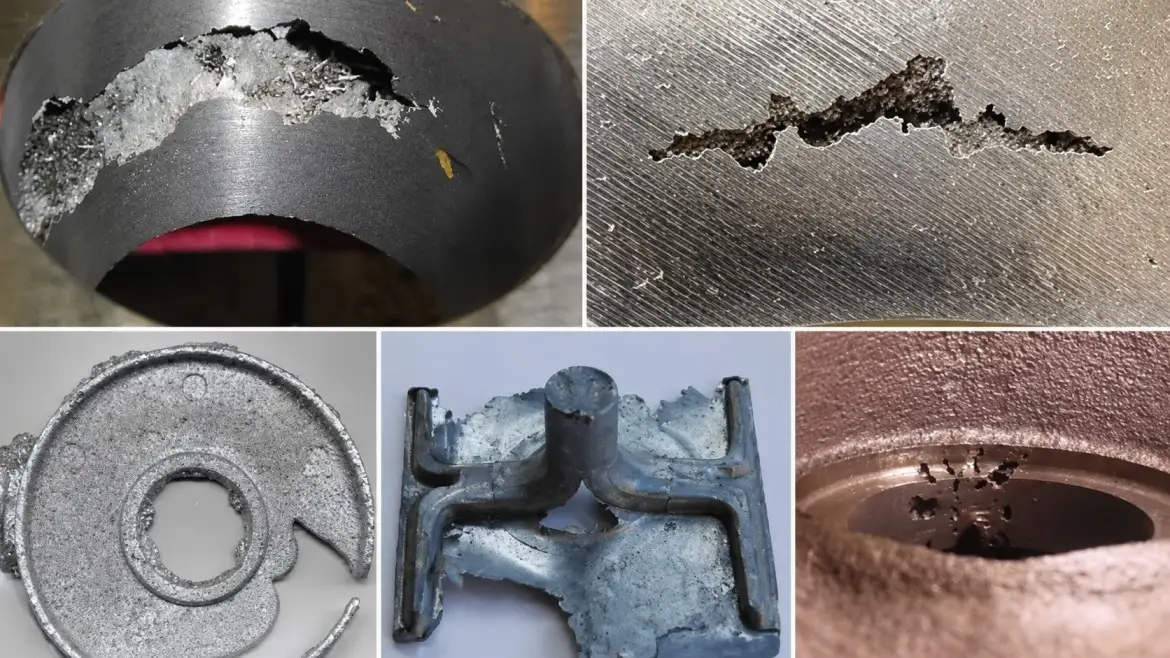
Casting Defects: Types, Causes, Remedies & Prevention
Casting is one of the most versatile ways to shape metal, but it is also a process where a lot can go wrong between the moment metal is poured and the moment it solidifies. A casting defect is any irregularity in a cast component that causes it to deviate from the intended shape, dimensions, or internal soundness. Some defects are cosmetic and easily tolerated. Others weaken the part, cause leaks, or lead to failure in service—and those are the ones that drive up scrap rates and cost.
This guide is a complete reference to casting defects: what each one is, what causes it, how to remedy it, how defects are detected, and how a well-run foundry prevents them in the first place. Whether you are an engineer diagnosing a specific problem, a buyer evaluating a supplier, or someone new to casting trying to understand what can go wrong, you will find the full picture here.
If you are still getting familiar with the casting process itself, it helps to first understand how metal casting works and the main casting methods, since most defects trace back to a specific stage of that process.
What Is a Casting Defect?
A casting defect is any flaw or irregularity that appears in a cast metal part and makes it deviate from the required specification. These flaws can be on the surface, where they are visible, or hidden inside the metal, where they can only be found through inspection.
Defects arise at different stages of casting—during mould preparation, metal melting, pouring, solidification, or cooling. Because each stage introduces its own risks, the same finished part can carry very different kinds of defects depending on where in the process something went wrong. Understanding which stage a defect points to is the first step in fixing it.
Why Do Casting Defects Occur?
Almost every casting defect traces back to one of five root causes. Recognizing the category quickly narrows down both the diagnosis and the fix:
- Mould and core issues: weak, poorly rammed, or badly vented moulds, and misaligned cores lead to shape and surface defects.
- Molten metal quality: dissolved gases, oxides, slag, and poor composition cause porosity and inclusions.
- Pouring problems: the wrong pouring temperature or speed causes cold shuts, misruns, and trapped gas.
- Solidification and cooling: uneven or overly rapid cooling causes shrinkage cavities, hot tears, and cracks.
- Design and gating: poor gating, inadequate risers, and abrupt section changes starve areas of metal or create stress points.
Keeping these five causes in mind makes the long list of individual defects far easier to understand, because each defect is really just a symptom of one of these underlying problems.
Categories of Casting Defects
Casting defects are usually grouped into a few broad categories based on their nature:
- Gas defects: porosity, blowholes, and pinholes caused by trapped gas.
- Shrinkage defects: cavities and voids caused by metal contracting as it solidifies.
- Pouring metal defects: cold shut and misrun caused by problems during pouring.
- Mould material defects: cuts, washes, scabs, swells, and metal penetration caused by the mould.
- Metallurgical and shape defects: hot tears, cracks, inclusions, mismatch, and mould shift.
The sections below cover each major defect in turn, with what it is, what causes it, and how to remedy it.
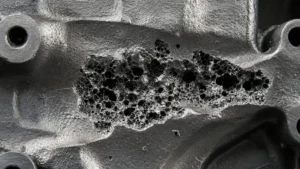 Gas Porosity, Blowholes & Pinholes
Gas porosity is one of the most common casting defects. It appears as rounded holes or voids, either on the surface or inside the casting, caused by gas being trapped as the metal solidifies. Larger cavities are called blowholes; very small ones are called pinholes.
Causes: gas dissolved in the molten metal, moisture in the mould, poor mould venting, and excessive pouring turbulence that draws air into the metal.
Remedies: degas the molten metal before pouring, reduce mould moisture, improve venting so gases can escape, and control pouring to minimize turbulence.
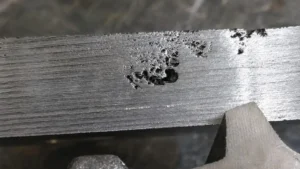 Shrinkage Defects and Shrinkage Porosity
As metal cools from liquid to solid, it contracts. If more molten metal is not fed into those regions during solidification, the contraction leaves voids. These shrinkage defects can be large visible cavities or fine, sponge-like shrinkage porosity concentrated in the thicker sections of a casting, where the metal solidifies last.
Causes: inadequate feeding from risers, poor gating design, uneven section thickness, and cooling rates that let thick sections freeze off from their metal supply.
Remedies: design an effective riser and gating system that keeps feeding metal as the part solidifies, use chills to control the direction of solidification, and design parts to avoid sudden thick-to-thin transitions.
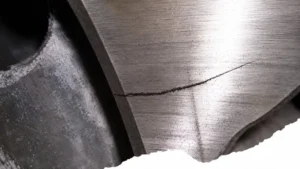
Cold Shut
A cold shut is a weak seam or discontinuity that forms when two streams of molten metal meet inside the mould but fail to fuse together properly. It shows up as a visible line or lap on the surface and represents a genuine weak point in the part.
Causes: pouring temperature too low, molten metal flowing too slowly, or gating that forces two metal fronts to meet after they have already begun to cool.
Remedies: raise the pouring temperature, increase pouring speed, and redesign the gating so the mould fills before the metal loses fluidity.
Misrun
A misrun occurs when the molten metal solidifies before it completely fills the mould cavity, leaving the casting incomplete. It is closely related to cold shut and usually shares the same underlying causes.
Causes: pouring temperature too low, insufficient metal fluidity, thin sections that cool too fast, or a gating system that cannot fill the cavity quickly enough.
Remedies: increase pouring temperature and speed, improve the fluidity of the metal, and review the design of thin sections and the gating system.
Hot Tears and Cracks
Hot tears are cracks that form while the casting is still hot and only partially solidified, when the contracting metal is pulled apart by stresses it is not yet strong enough to resist. Cracks can also form later, during cooling, from residual stress.
Causes: restrained contraction (the mould or core resisting the metal as it shrinks), sharp corners and abrupt section changes that concentrate stress, and non-uniform cooling.
Remedies: design generous fillets and gradual section transitions, allow the mould and cores to give slightly as the metal contracts, and control cooling to reduce stress.
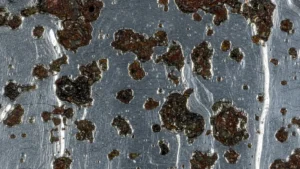
Inclusions (Sand and Slag)
Inclusions are foreign, non-metallic particles trapped inside the casting—typically sand washed from the mould, or slag and oxides carried in with the molten metal. They weaken the casting and often act as starting points for cracks.
Causes: loose or low-strength mould sand that erodes during pouring and slag or oxides not skimmed from the melt before pouring.
Remedies: improve mould strength and refractoriness, use filters in the gating system, and practice good melting and skimming so slag never reaches the mould.
Mold Shift and Mismatch
A mismatch, or mould shift, is a horizontal misalignment between the top (cope) and bottom (drag) halves of the mould, leaving the two halves of the casting offset from each other. A related defect, core shift, is the misalignment of a core, which shows up as a vertical displacement.
Causes: worn or loose alignment pins, careless mould closing, and poorly located cores.
Remedies: maintain alignment pins and mould hardware, close moulds carefully, and locate and support cores correctly.
Metal Penetration, Scab, and Swell
These are mould-related surface defects. Metal penetration happens when molten metal seeps into the spaces between sand grains, leaving a rough, sandy surface. A scab is a rough, raised area where sand has lifted and metal has flowed beneath it. A swell is a bulge on the casting surface caused by the mould wall moving under the pressure of the metal.
Causes: sand grains too coarse or too loosely packed, soft or uneven ramming, and moulds not strong enough to resist the pressure of the metal.
Remedies: use finer sand where needed, ram the mould evenly and firmly, and increase mould strength so it holds its shape under pouring pressure.
How to Detect Casting Defects
Finding defects reliably matters as much as understanding them — a defect that reaches a customer is far more costly than one caught in the foundry. Castings are inspected using a combination of methods, chosen according to whether the defect is on the surface or hidden inside:
- Visual inspection: the first check, catching obvious surface defects like misruns, cold shuts, scabs, and mismatch.
- Dye penetrant inspection (DPI): a dye is applied to reveal surface-breaking cracks and porosity too fine to see by eye.
- Magnetic particle inspection (MPI): reveals surface and near-surface defects in ferrous castings.
- Ultrasonic testing (UT): uses sound waves to find internal voids, shrinkage, and cracks without cutting the part.
- Radiographic testing (X-ray): images the interior of the casting to reveal internal porosity, shrinkage cavities, and inclusions.
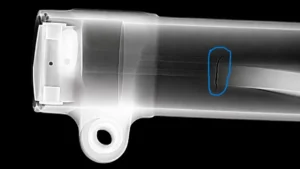
A quality foundry combines these so that both surface and internal defects are caught before a part ships. This is one area where suppliers differ significantly, so it is worth asking any casting supplier what inspection methods they use.
How to Prevent Casting Defects
Most defects are preventable, and prevention is far cheaper than rework or scrap. Rather than treating each defect in isolation, a well-run foundry controls the process as a whole:
- Control the molten metal: degas and skim the melt, control composition, and pour at the correct temperature so the metal stays fluid enough to fill the mould without trapping gas.
- Design gating and risers properly: a good gating system fills the cavity smoothly, and well-placed risers keep feeding metal to compensate for shrinkage.
- Build sound moulds: use sand of the right strength, moisture, and permeability; ram evenly; and vent well so gases can escape.
- Manage solidification: use chills and thoughtful part design to guide the direction and rate of cooling, avoiding sudden thick-to-thin transitions.
- Design the part for casting: generous fillets, uniform wall thickness, and gradual section changes reduce shrinkage, hot tears, and cracks before they can form.
- Inspection and feedback: consistent inspection and root-cause analysis let a foundry correct problems at the source rather than repeating them.
Taken together, these controls are what separate a foundry that occasionally ships defects from one that consistently delivers sound castings.
Casting Defects in Specific Processes
While the defects above apply broadly, some are more common in particular casting methods:
- Sand casting defects: Sand casting is more prone to mold-related defects such as sand inclusions, cuts and washes, scabs, and metal penetration, because the mould itself is made of sand. See our guide to the sand casting process for more.
- Aluminium casting defects: Aluminum is especially prone to gas porosity and shrinkage because of how it absorbs hydrogen and how it solidifies, so degassing and feeding are critical. See our guide to aluminum casting.
- Investment casting defects: The ceramic shell gives a far smoother surface than sand, so mould-related defects are rare, but the shell can crack during dewaxing and any distortion in the wax pattern carries straight through to the finished part. See our guide to the investment casting process.
Understanding which defects a given process tends toward makes them easier to anticipate and prevent.
Frequently Asked Questions
Q1. What are casting defects?
Casting defects are irregularities in a cast metal part that make it deviate from the intended shape, dimensions, or internal soundness. They can be on the surface or hidden inside and are caused by problems in the mould, the molten metal, pouring, or solidification.
Q2. What are the main types of casting defects?
The main types are gas porosity (blowholes and pinholes), shrinkage defects, cold shut, misrun, hot tears and cracks, inclusions, mould shift or mismatch, and mould surface defects such as metal penetration, scab, and swell.
Q3. What causes casting defects?
Most defects trace to five root causes: mould and core problems, poor molten metal quality (gas, slag, and oxides), incorrect pouring temperature or speed, uneven solidification and cooling, and poor gating or part design.
Q4. What is the difference between porosity and shrinkage defects?
Gas porosity is caused by gas trapped in the metal, appearing as rounded holes. Shrinkage defects are caused by the metal contracting as it solidifies without enough molten metal fed in to compensate, leaving voids in the thicker, last-to-solidify sections.
Q5. What is a cold shut in casting?
A cold shut is a weak seam that forms when two streams of molten metal meet but fail to fuse, usually because the pouring temperature was too low or the metal cooled before the mould filled. It creates a genuine weak point in the casting.
Q6. How are casting defects detected?
Through visual inspection, dye penetrant inspection for surface cracks, magnetic particle inspection for surface and near-surface defects, ultrasonic testing for internal voids, and radiographic (X-ray) testing for internal porosity, shrinkage, and inclusions.
Q7. How can casting defects be prevented?
By controlling the molten metal (degassing, skimming, and correct temperature); designing proper gating and risers; building sound, well-vented moulds, managing solidification with chills and good part design; and inspecting consistently to correct problems at the source.
Q8. Which casting defects are most common in aluminium casting?
Gas porosity and shrinkage are the most common in aluminium casting, because aluminium readily absorbs hydrogen gas and contracts significantly as it solidifies. Degassing the melt and designing good feeding are the key preventive measures.