

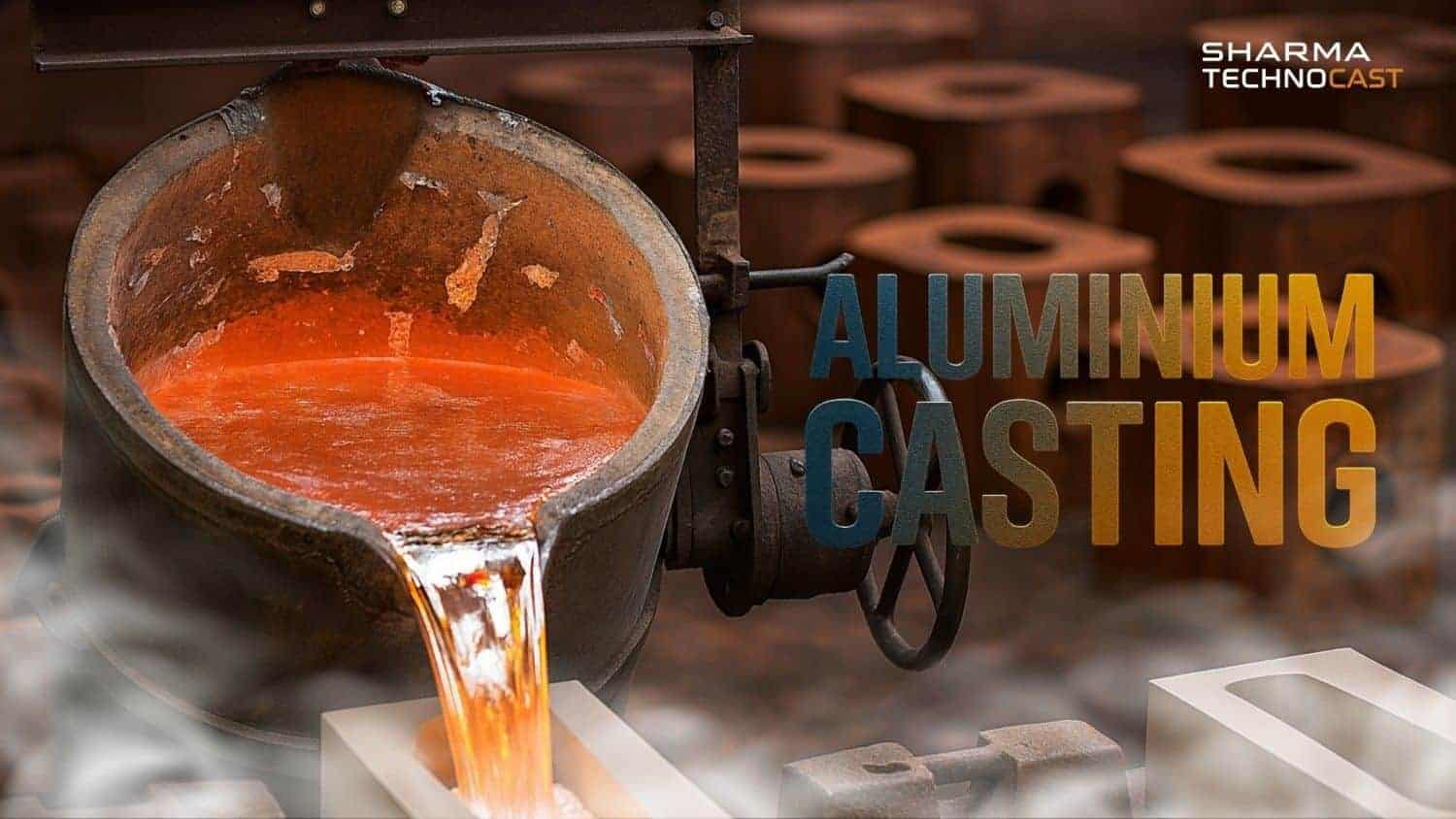
What Is Aluminium Casting?
Aluminium casting is the process of pouring molten aluminium into a mould to produce a metal component of a defined shape. It is one of the most widely used casting processes in industrial manufacturing, valued for aluminium’s low weight, corrosion resistance, and good thermal and electrical conductivity.
It follows the same metal casting process as ferrous work, but aluminium’s much lower pouring temperature changes how both the mould and the melt get handled.
Aluminium’s relatively low melting point and excellent castability make it suitable for a wide range of casting methods, from sand casting to high-pressure die casting, allowing manufacturers to match the process to the required volume, complexity, and tolerance.
Common Aluminium Casting Methods
Sand casting — molten aluminium is poured into a sand mould. Flexible and economical for large or low-volume parts, though with rougher surfaces and looser tolerances.
Investment casting is used less often for aluminium, but it earns its place where the part carries fine detail or thin walls that a die cannot fill reliably.
Gravity die casting (permanent mould) — aluminium is poured into a reusable metal mould under gravity. Produces better surface finish and mechanical properties than sand casting, suited to medium volumes.
High-pressure die casting — molten aluminium is injected into a steel die under high pressure. Fast and precise, ideal for high-volume production of complex thin-walled parts.
The right method depends on the component’s size, complexity, required tolerances, and production volume.
Advantages of Aluminium Casting
- Lightweight — aluminium offers a high strength-to-weight ratio, valuable in automotive and aerospace applications
- Corrosion resistance — a natural oxide layer protects aluminium in many service environments
- Good conductivity — suited to heat-dissipation and electrical components
- Castability — aluminium flows well into complex and thin-walled geometries
- Recyclability — aluminium can be recycled without loss of key properties
Aluminium does bring its own problems. It absorbs hydrogen readily in the melt and releases it during solidification, so gas porosity and shrinkage are the two defects that show up most often, and degassing before the pour matters far more than it does with steel.
Applications of Aluminium Casting
Aluminium castings are used extensively in automotive components (housings, brackets, engine parts), aerospace structures, electrical enclosures, heat sinks, pump and valve bodies, and general engineering hardware where weight and corrosion resistance matter.
Aluminium Casting at Sharma Technocast
Sharma Technocast runs aluminium alongside its ferrous casting lines in Ahmedabad, so one metal casting manufacturer handles pattern making, pouring, heat treatment and finish machining rather than the job moving between suppliers.