

Sharma Technocast manufactures chemical process pumps for the fluids that destroy ordinary metal pumps: acids, alkalis, solvents, and corrosive effluent. The range is built in polypropylene, PVDF, and PTFE lining rather than plain cast iron, so the wetted parts survive what they're pumping. Whether you're transferring sulphuric acid, scrubbing corrosive gas, or running an effluent treatment plant, the pump is specified around the chemical, not the other way round.
Corrosion-resistant pumps in polypropylene, PVDF, and PTFE lining for acids, alkalis, and effluent.
Chemical pumps are centrifugal pumps built specifically to handle corrosive and aggressive liquids. The difference isn't the pumping principle, it's the material. A standard cast iron pump corrodes in days on hydrochloric acid or caustic soda; a chemical pump uses corrosion-resistant plastics and fluoropolymers so the acid meets a surface it can't attack.
That material choice is the whole game. Solid polypropylene handles a broad range of acids and alkalis at low cost. PVDF steps up for stronger, hotter chemicals. PTFE (Teflon) lining handles the most aggressive fluids of all. Picking correctly means matching the exact chemical and concentration to the right material, which is where duty details matter more than pump size.
A chemical pump works like any centrifugal pump: a rotating impeller adds velocity to the liquid, and the casing converts that to pressure and flow. The engineering difference is that every surface the liquid touches — impeller, casing, shaft sleeve, and seal — is either moulded from corrosion-resistant plastic or lined with fluoropolymer.
Some designs go further and remove the seal entirely. A sealless or glandless pump has no mechanical seal for the acid to leak through, which is the most common failure point on a chemical pump. Fewer wetted metal parts and no seal path means fewer ways for an aggressive fluid to escape or destroy the pump.
Wetted parts survive acids, alkalis, and solvents that eat metal pumps.
Glandless designs remove the leak path and can run dry safely.
Few wetted parts and no seal on sealless models means less to fail.
PP, PVDF, and PTFE between them cover almost any process fluid.
Contains hazardous and corrosive liquids reliably, protecting plant and people.
Chemical pumps handle transfer and loading/unloading of HCl, sulphuric acid, caustic, and other aggressive liquids. They scrub corrosive gases like NH3, CO2, SO3, and Cl2, feed filter presses for dyes and chemicals, and circulate chemical in metal finishing lines. They're the natural choice for pickling lines and scrubbers in steel plants, and the number-one pick for effluent treatment where corrosive discharge would wreck a metal pump.
Polypropylene (PP), PP-copolymer, and UHMWPE for general corrosive duty; PVDF for stronger acids and higher temperatures; PTFE / PFA / FEP lining for the most aggressive fluids. Material is selected by matching the exact chemical, concentration, and temperature of your process, since the wrong plastic fails as fast as the wrong metal.
Selection starts with your fluid and concentration and works back to PP, PVDF, or PTFE. A pump matched to the chemical lasts years; a mismatched one fails in weeks regardless of build quality.
PP, PPCP, UHMWPE, PVDF, and PTFE-lined construction, so you get the right material for the duty instead of the one a supplier happens to stock.
Where leak risk or dry-running is a concern, particularly on ETP duty, sealless construction removes the mechanical seal entirely.
On the PTFE-lined range the structural strength comes from a cast outer shell produced on our own casting line, with the lining protecting the wetted surface.
These pumps handle hazardous liquids, so the design priority is reliable containment and safe handling over the plant's life.
The series below are shown as products under this category.
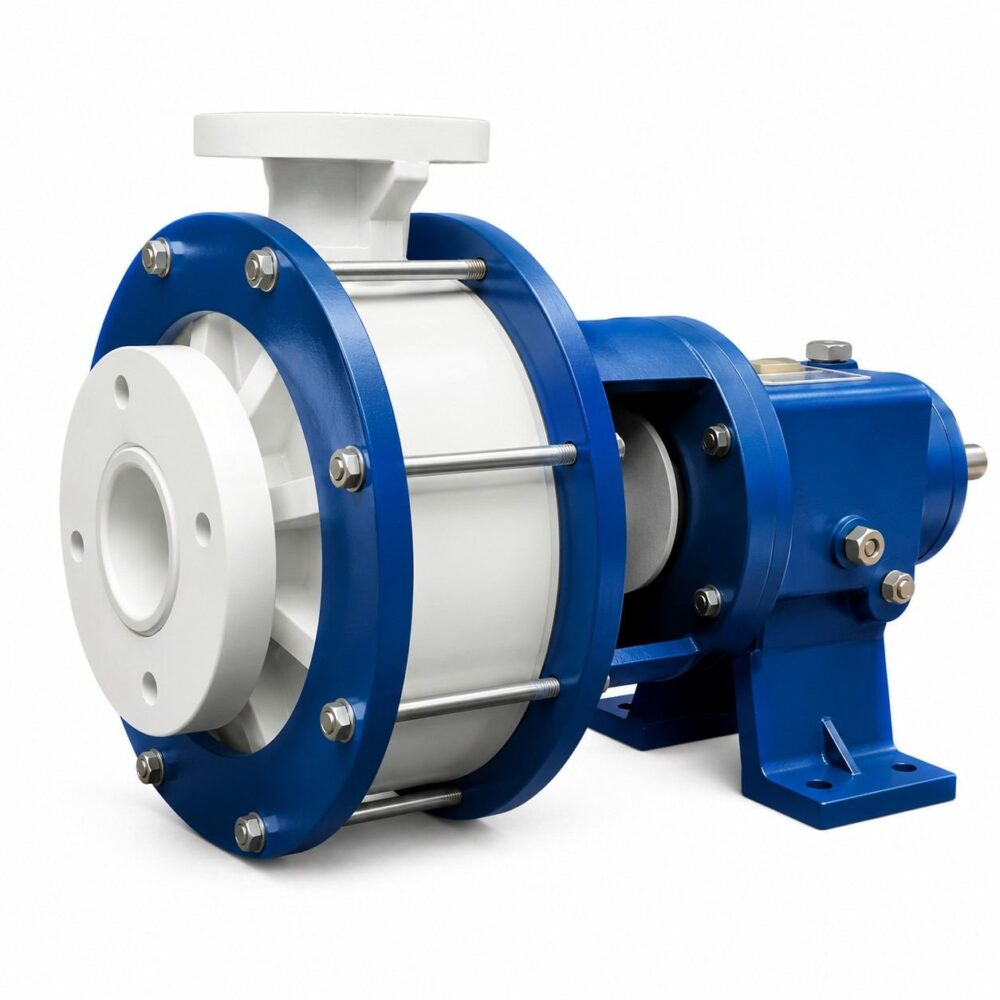
Corrosion-resistant polypropylene centrifugal pump for aggressive chemicals. Non-metallic PP/PVDF construction for acids, alkalis, and effluent duty.
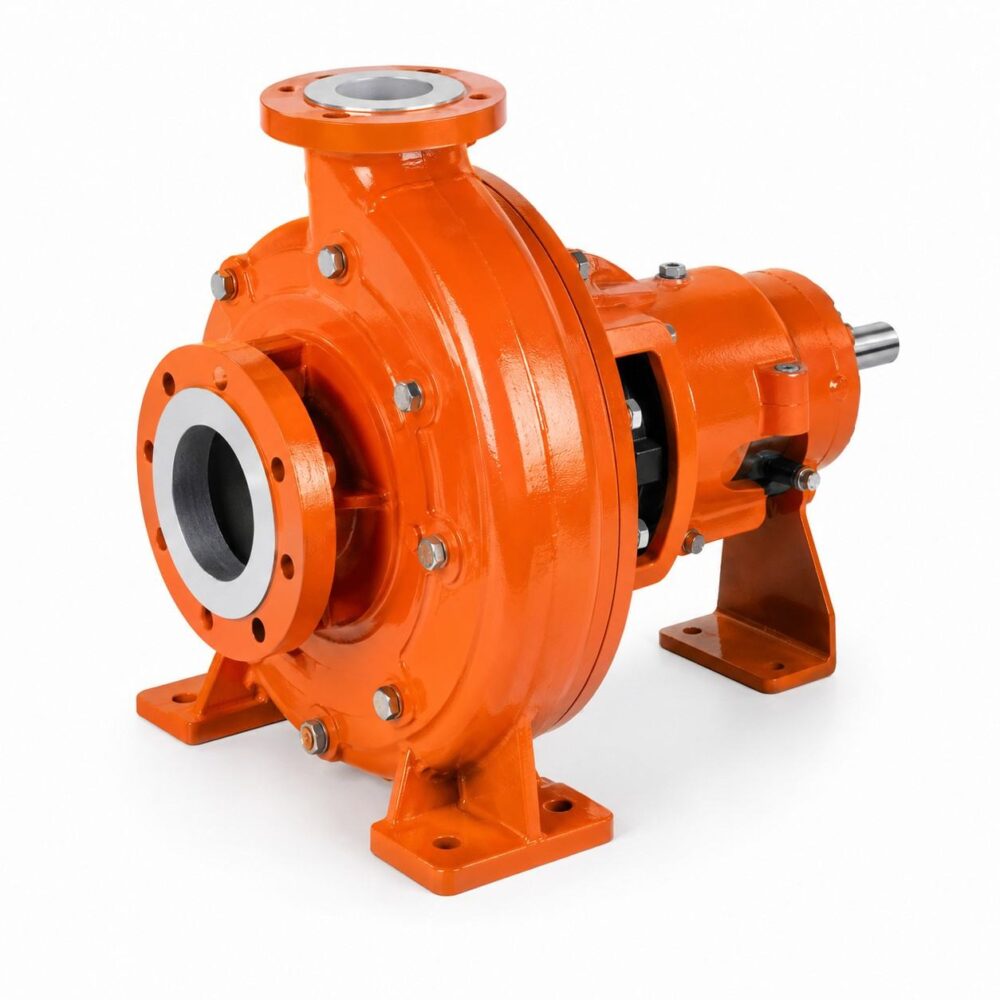
PTFE (Teflon) lined centrifugal process pump for highly corrosive liquids. Fluoropolymer-lined wet end handles acids and solvents up to 200°C.
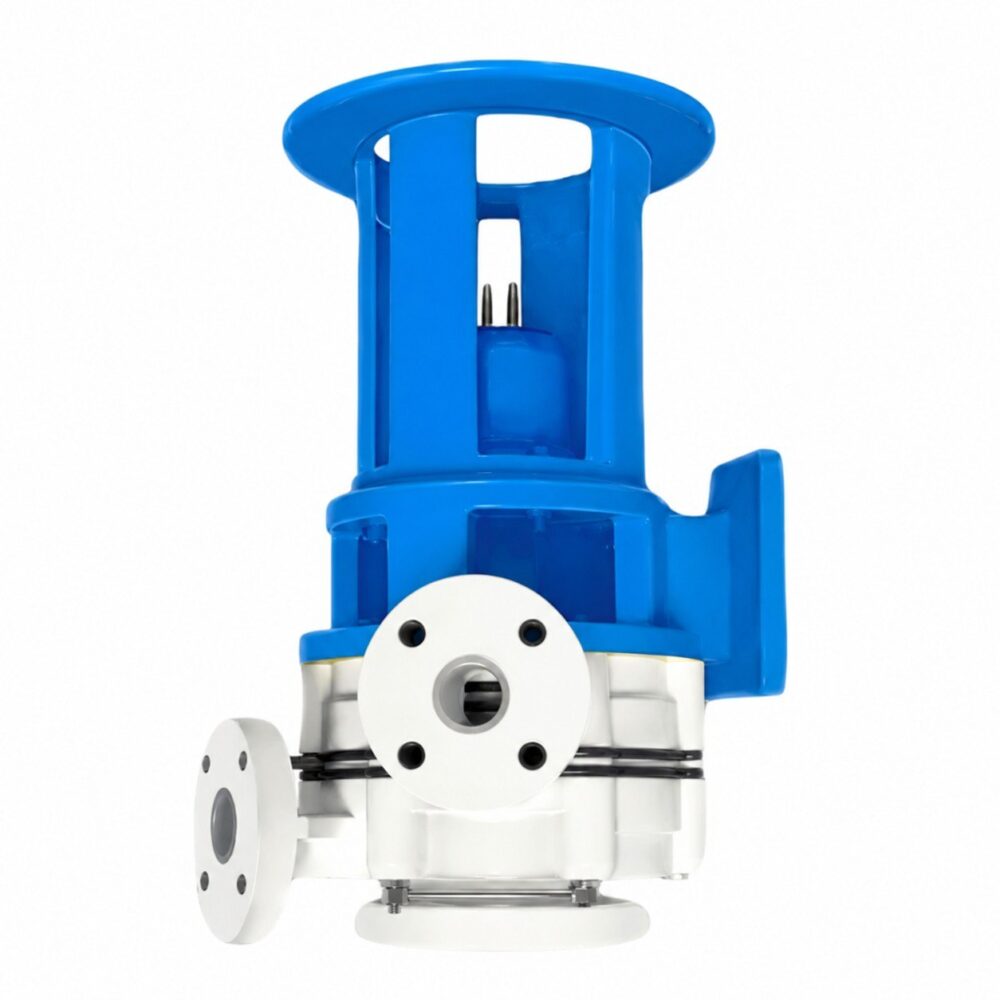
Vertical seal-less / gland-less polypropylene pump that can run dry. No mechanical seals or glands, the first choice for effluent and corrosive transfer.
Send us the fluid, flow, head, and temperature, and our engineers will match a series or trim a pump to your exact operating point.