

How to Choose a Forging Manufacturer in India for OEM & Industrial Applications
Introduction
Selecting the right forging manufacturer is an important decision for OEMs, industrial buyers, procurement teams, and engineering companies. Forged components are widely used in industrial machinery, automotive systems, oil & gas equipment, construction machinery, power generation equipment, and heavy engineering applications where strength, dimensional stability, and material reliability are critical.
In many industrial projects, the forging supplier directly affects:
- component performance
- machining consistency
- production timelines
- assembly compatibility
- material traceability
- maintenance requirements
- long-term operating reliability
For this reason, OEM buyers often evaluate forging manufacturers not only on pricing, but also on manufacturing capability, quality systems, machining support, inspection standards, production capacity, and technical understanding of industrial applications.
India has become a major manufacturing hub for industrial forgings due to its strong engineering ecosystem, availability of raw materials, skilled manufacturing workforce, and integrated machining and fabrication capabilities. However, selecting the right forging partner still requires careful technical and operational evaluation.
This guide explains the major factors industrial buyers should consider before selecting a forging manufacturer in India for OEM and industrial applications.
What Is Industrial Forging?
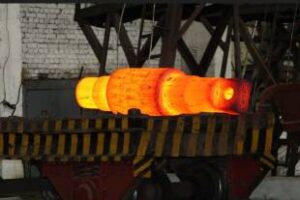
Forging is a manufacturing process where metal is shaped using compressive force under controlled temperature conditions. The process improves grain structure and mechanical strength, making forged components suitable for high-load industrial applications.
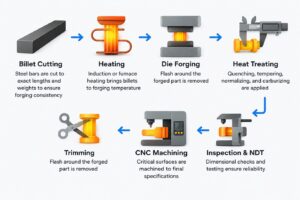
The forging process covers several distinct routes, and a supplier who runs only one of them will steer you toward it regardless of what the part needs.
Forged components are commonly used where:
- high strength is required
- impact resistance is important
- fatigue performance matters
- pressure and load conditions are severe
- reliability is critical
Industrial forging is widely used for:
- shafts
- flanges
- gears
- rings
- couplings
- rollers
- pipe fittings
- automotive parts
- heavy engineering components
- oil & gas equipment
Compared to fabricated or cast components, forged parts often provide better structural integrity and mechanical performance in demanding operating environments.
Why OEMs Prefer Forged Components
OEM manufacturers often choose forged components because of their strength and durability advantages.
Improved Mechanical Strength
The forging process refines the grain flow of the material, improving:
- tensile strength
- impact resistance
- fatigue resistance
- wear resistance
This is important in rotating machinery, load-bearing assemblies, and pressure-handling equipment.
Better Reliability in Industrial Applications
Forged components are commonly selected for applications exposed to:
- vibration
- high pressure
- thermal stress
- repeated loading cycles
- mechanical shock
This makes forging suitable for critical engineering applications.
Better Machining Stability
Forged parts often provide better machining consistency compared to raw fabricated structures or irregular cast surfaces. This helps maintain dimensional tolerances during CNC machining operations.
Reduced Material Failure Risks
Proper forging reduces internal voids and improves structural consistency, helping reduce material failure risks in industrial service conditions.
Types of Forging Processes Used in Industrial Manufacturing
Before selecting a forging manufacturer, buyers should understand the major forging processes used in industrial production.
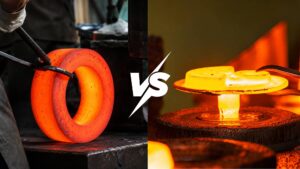
Open Die Forging
Open die forging is commonly used for:
- large shafts
- heavy engineering components
- rollers
- custom forged blocks
This process is suitable for lower production quantities and larger component sizes.
Closed Die Forging
Closed die forging is used for:
- automotive components
- industrial fittings
- precision industrial parts
- repeat production components
This process offers better dimensional repeatability and production efficiency.
Ring Rolling
Ring rolling is used to manufacture:
- bearing rings
- flanges
- gear blanks
- pressure vessel rings
This process is common in oil & gas and heavy engineering industries.
Hot Forging and Cold Forging
Hot forging is generally used for larger industrial parts requiring significant deformation, while cold forging is used for smaller precision components requiring tighter dimensional control.
Important Factors to Consider Before Choosing a Forging Manufacturer
Selecting a forging manufacturer involves more than checking pricing or production capacity. Industrial buyers usually evaluate technical capability, process reliability, inspection systems, and long-term supply consistency.
Manufacturing Capability
The supplier should have suitable forging infrastructure for the required component size, material grade, and production volume.
Important evaluation points include:
- forging press capacity
- hammer capacity
- die development capability
- heat treatment facilities
- raw material handling systems
- machining support
- testing facilities
Manufacturers with integrated production systems generally provide better process control and production coordination.
Material Expertise
Industrial forgings are manufactured using various ferrous and non-ferrous materials including:
- carbon steel
- alloy steel
- stainless steel
- tool steel
- aluminum alloys
- brass
- special engineering alloys
The supplier should understand:
- material behavior during forging
- heat treatment requirements
- machinability
- application suitability
- mechanical property requirements
Material selection directly affects performance and service life.
Dimensional Tolerance Capability
Tolerance requirements vary depending on the application and post-machining process.
Ask what the supplier holds as standard rather than what they can hold at best. Published forging tolerances give you a benchmark to compare quotes against.
OEM buyers should verify:
- forging dimensional accuracy
- machining tolerances
- repeatability across batches
- inspection methods
- gauge systems
For precision industrial applications, forging manufacturers often work closely with CNC machining teams to maintain final component accuracy.
Importance of CNC Machining Support After Forging
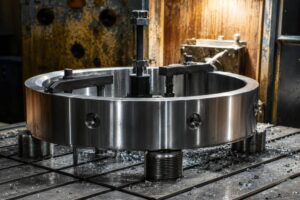
Many forged components require secondary machining operations before assembly or industrial use.
This makes integrated Precision Machining capability an important factor when selecting a forging supplier.
Why Machining Support Matters
Forged components may require:
- drilling
- boring
- threading
- surface finishing
- precision turning
- milling
- tolerance correction
Manufacturers with in-house CNC machining capabilities can:
- reduce lead times
- improve dimensional consistency
- simplify supply chains
- improve quality coordination
This is especially important for OEM buyers sourcing ready-to-install industrial components.
Benefits of Integrated Manufacturing
A forging manufacturer with CNC machining and fabrication support can handle:
- raw forging production
- finish machining
- fabrication assembly
- inspection
- final dispatch
This reduces dependency on multiple vendors and improves production coordination.
Quality Standards to Check in a Forging Manufacturer
Industrial buyers often prioritize quality systems before approving suppliers for long-term production programs.
Material Traceability
The supplier should maintain proper traceability records for:
- raw materials
- heat numbers
- batch identification
- production history
- inspection records
Traceability is especially important in:
- oil & gas
- aerospace
- heavy engineering
- power generation
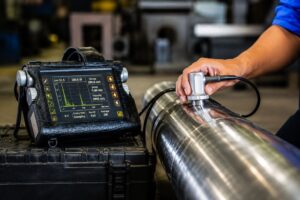
Inspection and Testing Capability
Reliable forging manufacturers generally perform:
- dimensional inspection
- hardness testing
- chemical analysis
- tensile testing
- ultrasonic testing
- magnetic particle testing
Inspection capability helps ensure process consistency and compliance with industrial specifications.
Quality Documentation
OEM buyers often request:
- mill test certificates
- inspection reports
- dimensional reports
- heat treatment records
- third-party inspection documents
Manufacturers should be able to provide proper production documentation when required.
Production Capacity and Lead Time Evaluation
Industrial projects often depend on strict production schedules. Delays in forged component supply can affect machining schedules, assembly operations, and project delivery timelines.
Production Planning Capability
Buyers should evaluate:
- monthly production capacity
- batch handling capability
- tooling development timelines
- raw material availability
- scheduling systems
Scalability for OEM Orders
A supplier should be able to support:
- prototype quantities
- medium batch production
- high-volume OEM production
Production scalability is important for long-term supplier partnerships.
Delivery Consistency
Reliable industrial suppliers maintain:
- process planning
- inventory coordination
- production tracking
- dispatch management
Consistent lead times are often more important than low pricing in industrial procurement.
Industrial Applications of Forged Components
Forged components are widely used across industrial sectors because of their strength and durability characteristics.
Automotive Industry
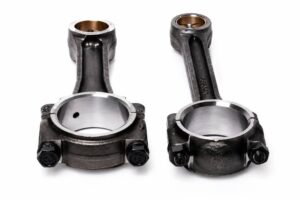
Forgings are used in:
- crankshafts
- connecting rods
- transmission parts
- steering components
Oil & Gas Industry
Industrial forgings are commonly used for:
- flanges
- valve bodies
- pipe fittings
- pressure handling components
Heavy Engineering
Heavy machinery applications include:
- shafts
- rollers
- couplings
- industrial machine components
Power Generation
Forged parts are used in:
- turbine systems
- pressure systems
- rotating equipment
- structural assemblies
Material Handling Equipment
Conveyor systems and industrial machinery use forged components for:
- rollers
- support assemblies
- rotating parts
- structural load-bearing systems
Forging vs Casting: Which Is Better for Industrial Components?
OEM buyers often compare forging and casting before selecting a manufacturing process.
When Forging Is Preferred
Forging is generally selected when:
- high strength is required
- impact resistance is important
- fatigue performance matters
- components face heavy loads
When Casting Is More Suitable
Metal Casting may be more suitable for:
- highly complex shapes
- large hollow sections
- lower machining requirements
- intricate geometries
In many industrial applications, forged and cast components are used together depending on design and performance requirements.
An experienced manufacturing company can often help buyers determine the most suitable production method based on:
- component geometry
- operating conditions
- production volume
- material requirements
- cost considerations
Importance of Engineering Support During RFQ Stage
Many industrial buyers evaluate suppliers based on technical response quality during RFQ discussions.
A forging manufacturer should be able to support:
- drawing interpretation
- material recommendations
- tolerance review
- machining allowance suggestions
- process feasibility analysis
Technical support during the quotation stage helps avoid production problems later.
Design and Reverse Engineering Support
Some manufacturers also provide Reverse Engineering support for:
- legacy components
- imported parts
- discontinued industrial assemblies
- worn machine components
This can help industrial buyers reduce downtime and localize component sourcing.
Why India Is a Major Hub for Industrial Forging
India has become an important global manufacturing center for industrial forgings because of:
- strong engineering infrastructure
- skilled manufacturing workforce
- integrated machining ecosystem
- raw material availability
- competitive production costs
Indian forging manufacturers supply components to:
- domestic OEMs
- export markets
- industrial machinery manufacturers
- engineering companies
- project contractors
Cities like Ahmedabad have strong industrial manufacturing ecosystems supporting:
- Forging
- Precision Machining
- Fabrication
- industrial component manufacturing
This integrated manufacturing environment helps improve production coordination and supply reliability.
How Integrated Manufacturing Improves Industrial Supply Chains
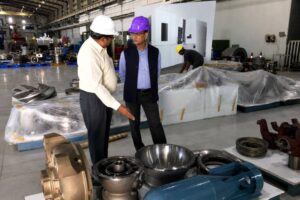
Industrial buyers increasingly prefer suppliers with multiple manufacturing capabilities under one roof.
Integrated manufacturing support may include:
- Forging
- Precision Machining
- Fabrication
- Pipe Bending
- Metal Casting
- industrial assembly
Advantages of Integrated Manufacturing
Benefits include:
- reduced outsourcing dependency
- faster production cycles
- better quality coordination
- improved communication
- reduced transportation handling
- easier project management
For OEMs, this can simplify procurement operations significantly.
Questions OEM Buyers Should Ask Before Finalizing a Forging Supplier
Before approving a forging manufacturer, procurement and engineering teams commonly evaluate the following:
Technical Questions
- What forging processes are available?
- What materials can be handled?
- What is the maximum forging size?
- Are machining services available?
- What inspection systems are used?
Production Questions
- What are standard lead times?
- Can prototype and batch production both be supported?
- What is the monthly production capacity?
- How are production delays managed?
Quality Questions
- Are material test certificates provided?
- Is third-party inspection supported?
- What traceability systems are followed?
- What dimensional inspection methods are used?
Commercial Questions
- What are tooling requirements?
- What are MOQ expectations?
- Are long-term OEM supply programs supported?
- How are repeat orders managed?
Why Industrial Buyers Work with Sharma Technocast
Sharma Technocast supports OEM and industrial manufacturing requirements through integrated production and engineering capabilities.
Sharma Technocast operates as a forged components manufacturer running open die, closed die and roll forging with heat treatment and CNC machining under one roof, so the material certificate follows the part end to end.
The company manufactures:
- forged components
- precision industrial parts
- fabricated assemblies
- heavy engineering components
- custom OEM manufacturing parts
Manufacturing capabilities include:
- Forging
- Precision Machining
- CNC Machining
- Metal Casting
- Fabrication
- Pipe Bending
- reverse engineering support
- finish machining and inspection
Industrial buyers work with Sharma Technocast for:
- dimensional accuracy
- machining support
- material handling capability
- production consistency
- quality inspection processes
- batch and OEM production support
- reliable lead times
- integrated manufacturing coordination
This integrated manufacturing approach helps simplify industrial sourcing, machining coordination, inspection management, and long-term OEM production requirements across multiple engineering industries.
Conclusion
Choosing the right forging manufacturer in India involves evaluating much more than production cost. OEM buyers and industrial procurement teams must consider forging capability, machining support, quality systems, material expertise, production reliability, inspection standards, and long-term manufacturing consistency.
A reliable forging supplier should be able to support the complete industrial manufacturing process — from raw material selection and forging production to machining, inspection, and final dispatch.
For industrial companies sourcing critical engineering components, selecting a technically capable manufacturing partner helps improve:
- product reliability
- supply chain stability
- dimensional consistency
- production efficiency
- long-term operational performance
As industrial manufacturing requirements continue to become more precision-driven, integrated manufacturing capabilities and engineering support play an increasingly important role in supplier selection.
FAQs
What should OEM buyers check before selecting a forging manufacturer?
OEM buyers should evaluate manufacturing capability, material expertise, machining support, quality systems, inspection methods, production capacity, and delivery consistency before selecting a forging supplier.
Why are forged components stronger than cast components?
Forged components generally have improved grain structure and better mechanical properties, making them more suitable for high-load and impact-resistant applications.
Do forging manufacturers also provide CNC machining services?
Many industrial forging manufacturers provide CNC machining services for finish machining, drilling, threading, and dimensional tolerance control.
Which industries commonly use forged components?
Forged components are widely used in automotive, oil & gas, heavy engineering, power generation, industrial machinery, aerospace, and material handling industries.
What materials are commonly used in industrial forging?
Common forging materials include carbon steel, alloy steel, stainless steel, aluminum alloys, brass, and other engineering-grade metals.
Why is material traceability important in industrial forging?
Material traceability helps maintain quality control, inspection history, and compliance with industrial standards, especially in critical applications.
How does integrated manufacturing benefit OEM buyers?
Integrated manufacturing reduces outsourcing dependency and improves production coordination by combining forging, machining, fabrication, and inspection under one supplier.
Can forging manufacturers support prototype and batch production?
Yes. Most industrial forging manufacturers support both prototype development and high-volume production depending on customer requirements.
What information should be included in an RFQ for forged industrial components?
To receive an accurate quotation from a forging manufacturer, OEM buyers should provide component drawings, material grade, dimensions, machining requirements, tolerances, quantity, inspection standards, and application details. Clear technical information helps improve production planning, machining accuracy, and lead time estimation